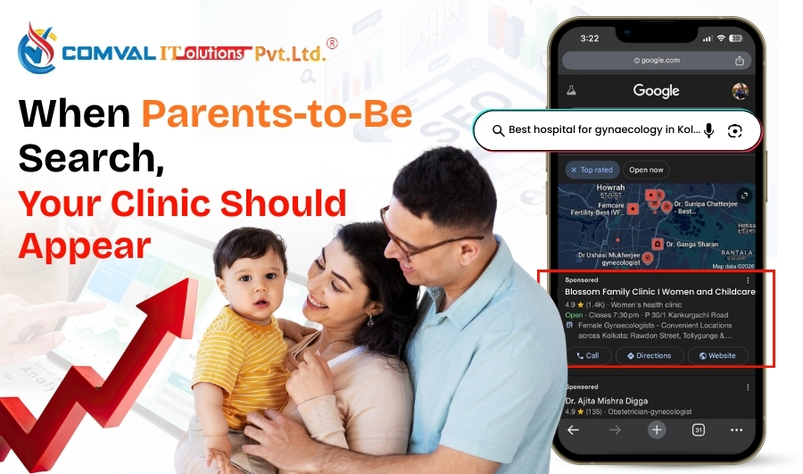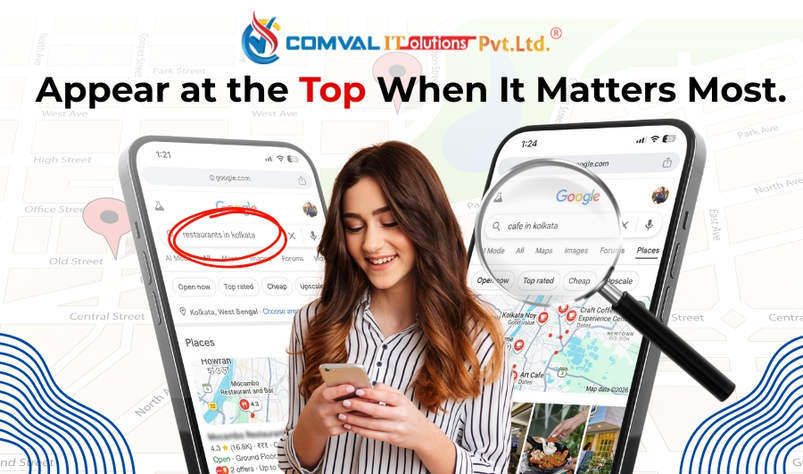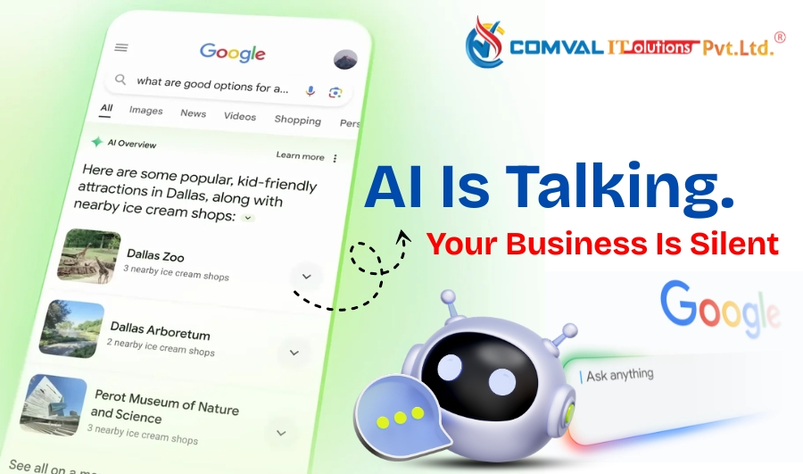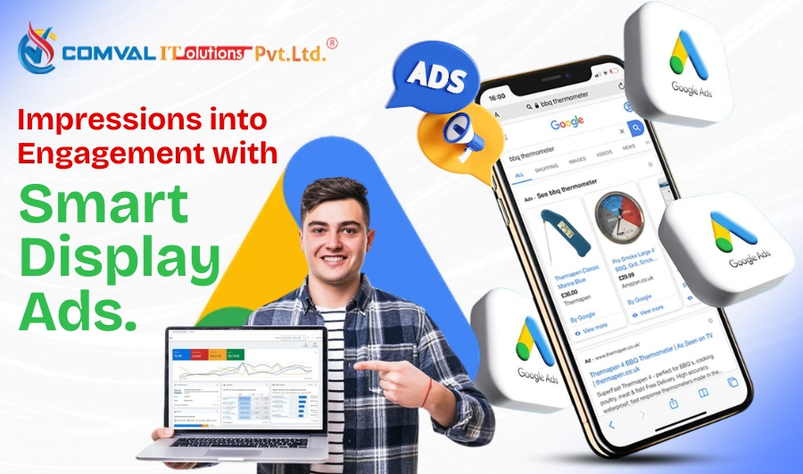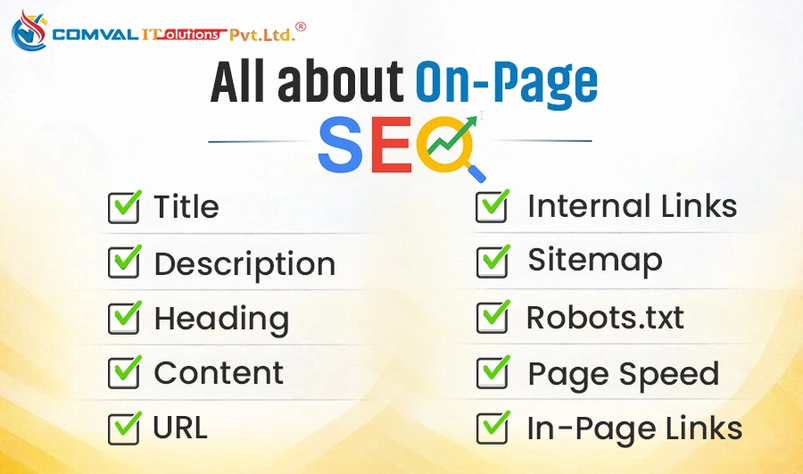
On-page SEO does more than improve search rankings; it directly influences how visitors interact with your website and, ultimately, your conversion rate. By optimizing elements such as page titles, meta descriptions, headings, internal links, and content structure, you guide users to the information they need quickly and efficiently. Clear calls-to-action, well-organized content, and fast-loading, mobile-friendly pages create a seamless experience that keeps visitors engaged. When users find exactly what they are looking for without friction, trust builds, engagement increases, and the likelihood of completing a desired action, whether signing up, purchasing, or contacting your business, rises significantly. In essence, on-page SEO quietly turns your website into a conversion-focused engine, turning traffic into tangible business results.
What On-Page SEO Really Means Today
Modern on page SEO aligns search intent with structured content that guides users toward clear decisions, not just keywords placed in headers.
Every high-performing page answers three questions clearly:
-
What is the user searching for?
-
Does this page fully satisfy that intent?
-
Is there a logical next step?
Titles, H1 tags, and meta descriptions must reflect buyer-level queries, not just broad informational phrases. Schema markup improves search visibility by helping engines understand context, whether through FAQ schema, service schema, or structured data that enhances click-through rates.
Further, core web vitals are not cosmetic metrics. Pages must load quickly, remain visually stable, and respond instantly to interaction. A slow page may still rank, but it rarely converts.
Internal linking distributes authority and keeps users moving through relevant content rather than exiting after one page. Optimized images, clean layout hierarchy, and mobile-first UX ensure that visitors do not abandon the site before they engage.
And that’s the difference between traffic and qualified leads.
How On-Page SEO Supports AEO, AIO, and SXO
On-page SEO is the foundation of a website’s visibility, relevance, and user experience. It plays a crucial role in Answer Engine Optimization (AEO), AI Optimization (AIO), and Search Experience Optimization (SXO) by ensuring that content is both discoverable by search engines and valuable to users.
For AEO, search engines prioritize content that provides clear and precise answers to user queries. On-page SEO techniques such as optimized headings, structured data, bullet points, and FAQs help search engines understand your content and present it in featured snippets or answer boxes. This ensures that users receive immediate and accurate information.
In the case of AIO, artificial intelligence relies on well-structured content to analyze context and relationships between topics. Proper use of semantic keywords, schema markup, and internal linking allows AI tools to interpret your content effectively. This improves recommendations, search visibility, and AI-driven interactions across multiple platforms.
SXO focuses on the overall user experience in search. On-page SEO contributes by ensuring fast page loading, mobile responsiveness, clear navigation, and engaging visuals. Optimized content layout and call-to-action elements guide users efficiently through your website. Positive user experience increases engagement metrics such as dwell time and reduces bounce rates, which search engines consider important ranking signals.
In summary, on-page SEO supports AEO, AIO, and SXO by making content understandable for search engines, AI tools, and users. Websites optimized in this way are more likely to rank higher, attract relevant traffic, and provide a superior user experience.
Businesses that integrate on-page SEO with AEO, AIO, and SXO strategies position themselves for long-term growth and digital success. Well-optimized content ensures that your website is not only found but also trusted and engaged with by your audience.
Where Your Are Getting Your On-Page SEO Wrong Maybe
Many companies overload pages with top-of-funnel keywords while ignoring commercial intent. Ranking for a broad phrase is not the same as ranking for a buying query.
Thin content with no clear hierarchy confuses both users and search engines. When headings lack structure and paragraphs lack depth, Google cannot confidently assess relevance.
-
Internal links are often neglected, leaving key service pages isolated.
-
Bounce rates rise because there is no guided pathway.
-
Schema is skipped and mobile usability is assumed rather than tested.
-
Core Web Vitals remain unmonitored.
These small technical gaps accumulate into lost opportunities.
As a professional on page SEO company, we always look beyond surface level fixes and evaluate how every element contributes to visibility and conversion.
What We Do Differently
At Comval, we follow a proven workflow that begins with technical clarity, moves through strategic keyword mapping, and ends with measurable performance tracking tied directly to business outcomes.
Our strategies include:
-
Technical Audit - A structured crawl identifies indexing issues, broken links, duplicate content, redirect chains, and crawl barriers. Without technical clarity, content improvements cannot perform properly.
-
Content Gap Analysis - Competitor pages are mapped against intent. Missing depth, missing subtopics, and missing high-intent keyword coverage are identified. Authority is built through completeness, not repetition.
-
Keyword Mapping - Primary keywords are assigned strategically to titles and H1 tags. Secondary and semantic variations are placed within structured H2 and H3 headings. This builds topical clarity rather than stuffing.
-
Content Restructuring - Content hierarchy is refined. Shorter paragraphs, logical section flow, and contextual linking improve readability and dwell time. Each page serves a defined purpose in the funnel.
-
Conversion Optimization - Calls to action are aligned with search intent. Informational pages guide toward consultation. Service pages guide toward inquiry. Buttons, forms, and content positioning are tested and refined.
-
Schema Implementation - Structured data enhances search listings and improves click-through by clarifying context to search engines.
-
Competitor Benchmarking - Top ranking pages are analyzed for structural strengths. The goal is not imitation, but identifying performance gaps and improving beyond them.
-
Performance Tracking - Monthly reporting includes rankings, traffic trends, Core Web Vitals, and conversion metrics. SEO services must show business impact, not just keyword movement.
How On-Page SEO For Small Businesses Actually Happen?
For small businesses, setting your priorities is essential. You need to understand that not every page needs immediate optimization, and it’s also not possible to rank all of them together.
Our affordable SEO services for small businesses focus first on high-intent pages such as the homepage, core service pages, and contact page. These areas influence revenue directly.
Instead of spreading effort thinly across dozens of blog posts, the right approach strengthens five to ten key pages first. Once those convert effectively, expansion into topical clusters becomes strategic rather than experimental.
The best SEO companies for small businesses understand funnel stages properly. They map content to awareness, consideration, and decision queries. The objective is steady lead growth and not vanity traffic.
One thing is for sure even at this age. Compared to paid advertising, organic search builds long-term equity. A well-optimized page continues producing results long after the initial investment.
What’s Our On-Page Approach For Small Businesses?
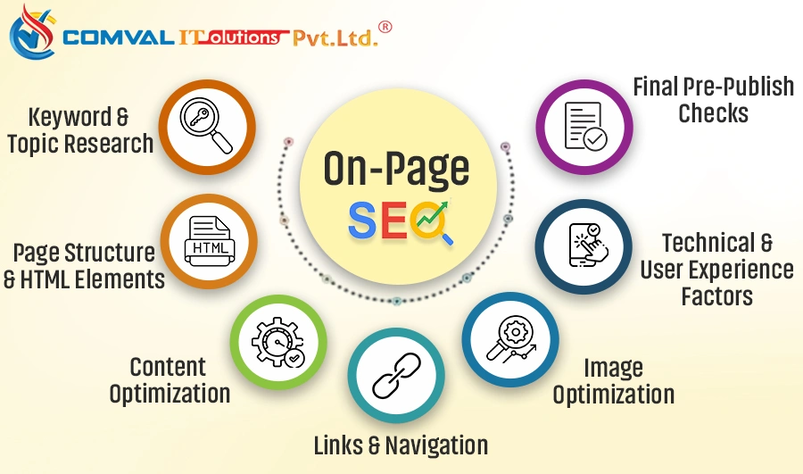
At Comval It Solutions, we approach on page SEO optimization with a strategy-first mindset. Our objective is never isolated ranking movement, but structured growth that connects visibility with qualified leads and revenue impact.
To achieve that goal, we follow a proven strategy that integrates technical precision, content architecture, and conversion engineering into one cohesive system.
-
Commercial Focus - Every page is evaluated based on revenue potential, not traffic vanity metrics.
-
Intent Precision - Search queries are mapped to decision stages to ensure visibility aligns with buying readiness.
-
Conversion Design - Page structure is engineered to guide users toward measurable action, not passive reading.
-
Signal Alignment - Content, UX, and technical elements are optimized together so search engines and users receive consistent relevance signals.
-
Scalable Growth - Optimization frameworks are built to expand into topical clusters and authority hubs over time.
-
Accountability - Reporting is tied to business KPIs such as qualified leads and cost per acquisition, not just ranking charts.
Understanding Different Types of SEO forMaximum Online Visibility
Search Engine Optimization (SEO) is no longer just about keywords. Modern SEO has multiple facets, each focusing on a specific area to improve visibility, user engagement, and website performance. Understanding these types is crucial for a comprehensive digital strategy.
Local SEO focuses on optimizing a business’s online presence to attract customers from a specific geographic area. Techniques include creating and optimizing Google Business Profiles, managing local citations, and using location-specific keywords. This is essential for small businesses or service providers aiming to reach nearby customers.
Global SEO targets audiences across countries and languages. It involves optimizing content for multiple regions, managing hreflang tags, and ensuring consistent website structure for international users. Global SEO helps brands expand reach and increase visibility in international search results.
Mobile SEO ensures a website performs efficiently on smartphones and tablets. With mobile-first indexing, search engines prioritize mobile-friendly pages. Optimizations include responsive design, fast loading times, simplified navigation, and mobile-optimized images and content.
Video SEO improves the visibility of video content on platforms like YouTube and search engines. It includes keyword-rich titles and descriptions, transcripts, thumbnails, and proper video schema markup. Video SEO drives engagement and enhances the chances of appearing in rich results.
Off-Page SEO focuses on external signals that influence rankings. This includes link building, social media mentions, influencer outreach, and online reviews. Off-page SEO strengthens website authority, credibility, and trustworthiness.
Technical SEO ensures that a website is easily crawlable and indexable by search engines. It includes optimizing site speed, fixing broken links, creating XML sitemaps, implementing structured data, and ensuring secure HTTPS connections. Technical SEO forms the foundation for all other SEO efforts.
In conclusion, effective SEO is multi-layered. Combining local, global, mobile, video, off-page, and technical SEO ensures a website is visible, authoritative, and user-friendly. A holistic approach to SEO maximizes traffic, engagement, and conversions.
Final Thoughts
As an experienced SEO company, we do not see ourselves as a short term ranking vendor. We work alongside our clients as long term partners, understanding their business model, revenue goals, and market position before recommending strategy.
When businesses invest in structured SEO marketing with us, they gain a system that connects on page optimization with authority building, brand visibility, and steady, sustainable growth.
Ready to embark on a structured on-Page optimization journey? Let’s talk.