You’ve launched your website. Your SEO is running. Your social media is active. But your competitors still seem to be everywhere while you’re nowhere to be seen. Sound familiar?
That gap between being online and being seen is exactly where Display Advertising (PPC) steps in. And in 2026, it’s not just a nice-to-have. It’s the difference between brands that stay forgettable and brands that dominate their market.
At Comval IT Solutions, a full-service digital marketing company based in Kolkata, we help businesses across India and internationally turn ad spend into measurable growth through smart, data-driven display advertising campaigns built for the modern buyer’s journey.
What Is Display Advertising and Why Does It Work Differently?
When most people hear “PPC,” they think of search ads the ones that appear when someone types a query into Google. Display advertising works on a different, and often more powerful, principle.
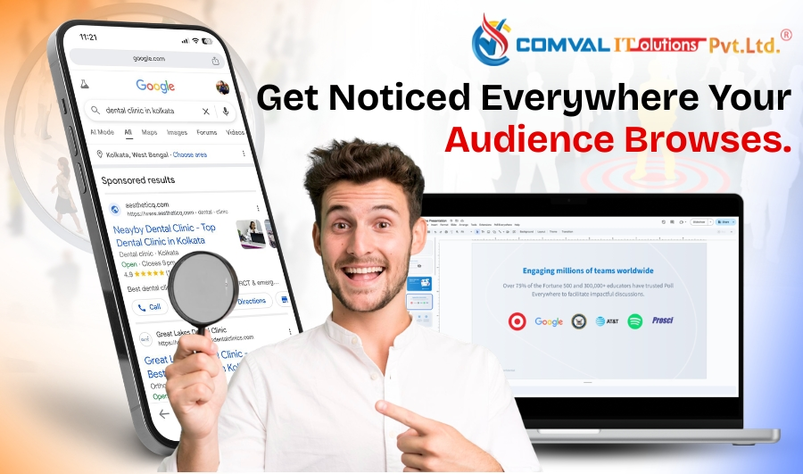
Display ads are visual banners, images, rich media, and video that appear across Google’s Display Network (covering over 35 lakh websites and apps), YouTube, social platforms, and news portals. They reach your audience before they even know they need you.
Think of it this way:
-
Search ads catch people when they are searching.
-
Display ads catch people when they are browsing, reading, streaming, or simply existing online.
This makes display advertising exceptionally powerful for:
-
Brand awareness campaigns targeting cold audiences
-
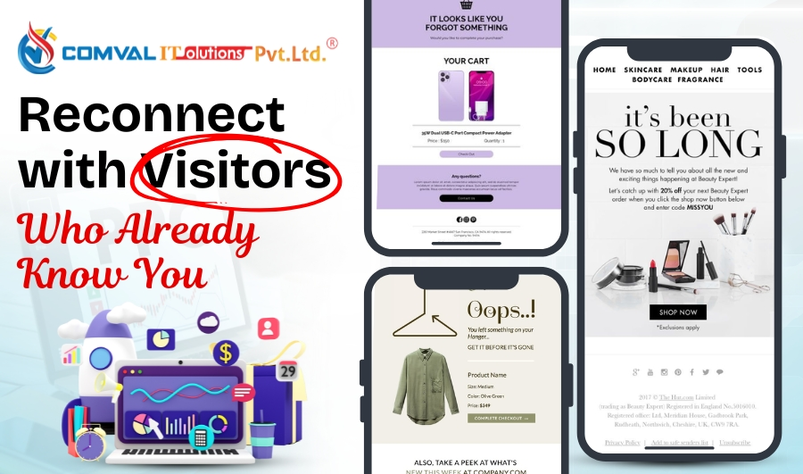
Remarketing - re-engaging people who visited your website but didn't convert
-
Launching new products or services to a specific segment
-
Businesses with longer sales cycles (B2B, real estate, education, healthcare, finance)
The result? More touchpoints, more recall, and ultimately more conversions at a cost that is often lower than search advertising when managed well.
The 2026 Shift: Why Display Advertising Demands Smarter Strategy
The landscape has evolved dramatically. Here’s what’s changed and why it matters for your campaigns right now.
Google’s Performance Max and Smart Display campaigns now use machine learning to serve your ads to the highest-intent segments automatically adjusting bids, placements, and creative in real time. Brands that embrace AI-driven targeting are seeing significantly better ROAS (Return on Ad Spend) than those running manual campaigns.
Third-party cookies are being phased out. In 2026, contextual targeting placing your ads next to content that matches your audience’s interests has become the gold standard. A saree brand ad appearing on a fashion blog. A cloud services ad appearing on a tech news site. It just works.
Users scroll past text in milliseconds. A crisp, well-designed display ad with the right message placed on the right platform stops the scroll. Creative quality is now a ranking signal for Google better creative means lower cost per click.
India’s digital advertising market is projected to cross ₹2 lakh crore in 2026, with PPC as one of its fastest-growing segments. Whether you’re targeting tier-1 cities like Mumbai, Delhi, and Bangalore, or tier-2 growth markets like Kolkata, Pune, and Ahmedabad display advertising now gives you precision access to all of them. And for international markets across the Middle East, Southeast Asia, the UK, and North America, the same infrastructure applies.
The Core Components of a High-Performing Display Ad Campaign
If you’ve ever run display ads and felt disappointed by the results, the problem usually isn’t the channel it’s the setup. Here’s what a properly structured campaign looks like.
Every display campaign must start with a single, clear objective:
-
Awareness - Maximize impressions among your target audience
-
Consideration - Drive website visits, video views, or product page sessions
-
Conversions - Generate leads, purchases, sign-ups, or calls
Trying to achieve all three with one campaign is one of the most common mistakes. The algorithm optimizes for what you tell it to. Be specific.
This is where the magic happens. Modern display advertising allows you to target:
-
Demographics - age, gender, household income, parental status
-
In-market audiences - people actively researching your product category
-
Custom intent audiences - built from specific search terms, competitor websites, or app behaviour
-
Remarketing lists - your past visitors, cart abandoners, video viewers, or email subscribers
-
Similar audiences - new users who behave like your existing customers
A compelling display ad does three things in under three seconds:
-
1. Grabs attention (visual contrast, bold colours, recognisable faces or products)
-
2. Communicates value (headline that answers "what's in it for me?")
-
3. Drives action (a clear, specific call-to-action — not "Click Here", but "Get Your Free Audit" or "Book a Free Demo")
For responsive display ads on Google, you need a minimum of 5 headlines, 5 descriptions, 1 landscape image, and 1 square image. The algorithm mixes and matches to find the best-performing combination automatically.
This is the step most businesses skip and it costs them everything. Clicking an ad is a micro-commitment. The landing page needs to honour that commitment immediately.
-
The landing page headline must match the ad headline (message match)
-
Page load time must be under 3 seconds on mobile
-
There should be one clear CTA above the fold
-
Trust signals client logos, testimonials, certifications must be visible
A beautifully designed ad sending traffic to a cluttered, slow homepage will produce poor results regardless of your budget.
In 2026, manual CPC (Cost Per Click) bidding has largely been replaced by smart bidding strategies:
-
Target CPA (Cost Per Acquisition) - for conversion-focused campaigns
-
Target ROAS - for e-commerce and revenue-driven campaigns
-
Maximize Conversions - for campaigns with sufficient conversion data
-
Maximize Clicks - for new campaigns building audience data
Starting with the right bidding strategy based on your data maturity is critical. Our display advertising specialists guide businesses through this decision based on their current account history, industry benchmarks, and business objectives.
Display Advertising vs. Other PPC Channels: Where Does It Fit?
| Channel | Best For | Avg. Cost | Conversion Stage |
|---|---|---|---|
| Search Ads | High-intent buyers | Higher CPC | Bottom of funnel |
| Display Ads | Awareness + Remarketing | Lower CPM | Top & Mid funnel |
| Social Ads | Interest-based targeting | Medium CPM | Top & Mid funnel |
| Shopping Ads | E-commerce products | Variable | Bottom of funnel |
| Video Ads (YouTube) | Brand storytelling | Low CPV | Top of funnel |
The most effective digital advertising strategies do not choose between these channels they use them together. Display advertising builds the awareness. Search advertising captures the intent. And remarketing brings back the ones who needed more time.
Common Display Advertising Mistakes (And How We Fix Them)
Here are the most frequent issues we diagnose when businesses come to us after a failed display campaign:
Running display ads to “All Users, 18-65, India” wastes budget on people who have zero interest in your offering. Fix: Start with in-market audiences and layer with demographics.
Creative fatigue is real. When the same banner follows the same person across the internet for weeks, they stop seeing it. Fix: Refresh creatives every 3-4 weeks and A/B test continuously.
If you’re only running prospecting display ads without a remarketing layer, you’re leaving a significant portion of conversions on the table. Fix: Set up dedicated remarketing audiences segmented by recency and page depth.
Google’s Display Network includes millions of websites not all of them relevant or brand-safe. Without placement exclusions, your ads can appear on irrelevant content. Fix: Exclude low-quality placements, gaming apps, and content categories that don’t match your brand.
The ad promises one thing; the page delivers another. Fix: Create dedicated landing pages for each campaign or ad group, with message-matched headlines and a single CTA.
Ready to Make Your Brand Unmissable Online?
Display advertising, done right, is not an expense it is a growth engine. It puts your brand in front of the right people, on the right platforms, at exactly the right moment in their journey. And with smart targeting, AI-optimised bidding, and compelling creative, the results are trackable, scalable, and consistent.
Explore our Display Advertising (PPC) services and get in touch for a free consultation today.