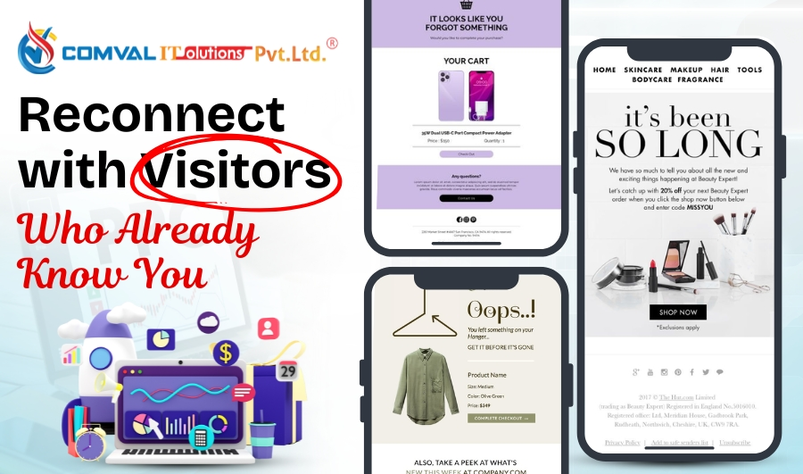
What Are Remarketing Ads?
Remarketing (sometimes called retargeting) is a form of paid online advertising that displays ads to people who have already interacted with your business. Google Ads remarketing lets you show targeted messages to previous visitors as they browse other sites, watch YouTube, or read news, keeping your brand top‑of‑mind and encouraging them to return. Since these users already know your brand, they are more likely to become customers.
Many marketers confuse remarketing and retargeting. PPC (pay‑per‑click) is the overarching model where advertisers pay when someone clicks an ad. Retargeting is a form of PPC that uses tracking tags (like Facebook’s Pixel or Google’s tag) to display ads to visitors who viewed specific pages. Remarketing, in a stricter sense, can mean sending follow‑up emails to leads or customers. In this article, remarketing refers to the Google Ads practice of serving ads to past visitors.
How Do Remarketing Ads Work?
To run remarketing campaigns, you place a small snippet of Google’s remarketing code (a tag or pixel) on your website. This tag adds visitors to remarketing lists through browser cookies; you can customize the tag for different pages to build more defined audiences. For example, an ecommerce shop might create a “pricing page” audience and show them specific offers when they browse other sites.
Because remarketing audiences consist of warm prospects, they typically click ads at two to three times the rate of new visitors. Remarketing clicks are also cheaper; display and social remarketing ads can cost two to one hundred times less per click than search ads, making them a cost‑effective way to recapture lost traffic.
Why Remarketing Is Powerful Campaign for Businesses
- Better conversion opportunities: Past visitors are already familiar with your brand, so they’re more likely to complete a purchase or submit a form.
- Higher click‑through rates: Remarketing ads often achieve 2–3× the click‑through rate of standard display ads.
- Lower cost per click: Compared with competitive search keywords, remarketing ad clicks can be dramatically cheaper.
- Sustained brand awareness: Displaying ads to people who left your site keeps your brand visible and builds trust.
These benefits make remarketing an essential part of a well‑rounded PPC strategy.
Types of Remarketing Ads
Different remarketing approaches serve different stages of the customer journey. Choosing the right type depends on your goals and audience size.
Dynamic remarketing personalizes ads by showing users the exact products or services they viewed. Google’s support page notes that dynamic remarketing builds on regular remarketing by pulling products from a feed and tailoring ads to past visitors. This approach is ideal for ecommerce and service businesses with defined offerings. Make sure your product feed and landing pages are well‑structured; personalization can’t fix poor messaging.
RLSA lets you adjust bids, keywords, or ad copy in search campaigns for users who previously interacted with your site. It’s particularly effective for high‑intent keywords in competitive markets where returning visitors are more likely to convert.
Customer Match uses first‑party data (email lists or CRM data) to reach known customers or leads across Google’s inventory. It’s valuable for businesses with repeat purchase cycles or long sales processes. Ensure compliance with privacy regulations (e.g., GDPR, CCPA) when uploading lists.

Best Practices for Effective Remarketing Campaigns
- Segment audiences by behaviour: Separate users based on actions—blog readers, product‑page viewers, pricing‑page visitors, cart abandoners, etc.—to deliver relevant messages. Don’t lump all visitors together; intent varies widely.
- Use frequency capping: Limit how many times the same person sees your ad. Google Ads’ frequency capping feature prevents wasted spend and reduces annoyance.
- Exclude recent customers: Avoid bombarding people who just converted. Wait an appropriate period before showing remarketing ads to recent purchasers.
- Leverage dynamic ads: For ecommerce or catalog services, use dynamic remarketing to automatically pull products from your feed. Ensure images and descriptions are high quality.
- Apply RLSA strategically: Adjust bids on competitive search keywords for returning visitors. This improves efficiency without altering the underlying search intent.
- Implement conversion tracking and analytics: Link Google Analytics with Google Ads, create audience lists, and set up conversion tracking. Use UTM parameters to measure campaign performance.
- Use multiple audiences: Build lists for different demographics, behaviours, or engagement levels to target high‑value customers.
- Align messaging with the buyer’s journey: Remarketing works best when it reinforces decisions users are already moving toward, rather than forcing progression.
- Comply with privacy laws: Obtain consent for cookies and data use, especially when using Customer Match or uploading lists.
Following these practices will help maximize your return while maintaining a positive user experience.
Remarketing vs Retargeting vs PPC
To recap: PPC is any advertising model where you pay when someone clicks your ad. Retargeting is a form of PPC that uses tracking tags to display ads to past visitors. Remarketing often refers to email follow‑ups to leads or customers, but in Google Ads terminology it usually means serving ads to previous site visitors. Understanding these terms helps you choose the right tactics and communicate clearly with stakeholders.
How Comval IT Solutions Can Help
As a google ads agency and full‑service digital marketing company, Comval IT Solutions understands that remarketing requires more than just turning on a campaign. Our team of Google Ads consultants and PPC experts can help you:
- Audit and set up your account: We install the remarketing tag correctly, link Analytics, and create meaningful audience lists.
- Develop strategy and segmentation: We segment audiences based on behaviour, intent, and demographics to deliver personalized ads.
- Design dynamic and responsive ads: For ecommerce clients, we build feeds and creative assets for dynamic remarketing.
- Optimize bids and budgets: Using RLSA and Customer Match, we allocate budgets to the most valuable search terms and customer segments.
- Control frequency and exclusions: We configure frequency capping, exclude recent purchasers, and ensure compliance with privacy regulations.
- Measure and refine: We track conversions, adjust messages based on funnel stage, and use data to improve ROI.
Whether you’re searching for a google ad company, google ads marketing partner, or google ads management company, Comval IT Solutions offers tailored remarketing solutions to help you convert more leads and get maximum value from your paid Google advertising.
Remarketing Ads are a powerful yet often misunderstood tool. They allow businesses to reconnect with interested users, improve conversion rates, and reduce cost per acquisition. By using proper segmentation, dynamic ads, frequency controls, and analytics, you can deliver relevant messages that support the buyer’s journey. Partnering with an experienced google ads agency near me like Comval IT Solutions ensures your remarketing campaigns are set up correctly, optimized continuously, and aligned with your overall growth goals.