Imagine someone searching for a digital marketing company. A few years ago, they might have typed “best digital marketing agency near me” into Google, opened a few websites, compared services, and contacted a company.
Today, that journey can look different.
The same person might ask an AI-powered search tool, “Which digital marketing strategy should a small business use to increase leads?” Instead of receiving only a list of websites, they may see a detailed explanation, comparisons, recommendations, and links to supporting sources.
This changing search experience is creating new opportunities and challenges for businesses.
As we approach 2027, having a website and targeting a few keywords is no longer a complete digital visibility strategy. Businesses also need useful content, clear information, technical accessibility, and a trustworthy online presence.
That does not mean traditional SEO is disappearing. It means businesses should understand how search is evolving and prepare accordingly.
In this guide, we explain the important SEO trends for 2027, the difference between SEO, AEO, and GEO, how AI-powered discovery works, and what businesses can do to improve their visibility.
The key takeaway: The future of SEO is not simply about ranking for more keywords. It is about making your business easier to discover, understand, trust, and choose.
What Is SEO in 2027?
Search Engine Optimization (SEO) is the process of improving a website so search engines can discover, understand, and display its content for relevant searches.
Traditional SEO activities include keyword research, content optimization, website performance improvements, internal linking, and building a credible online presence.
These activities remain important.
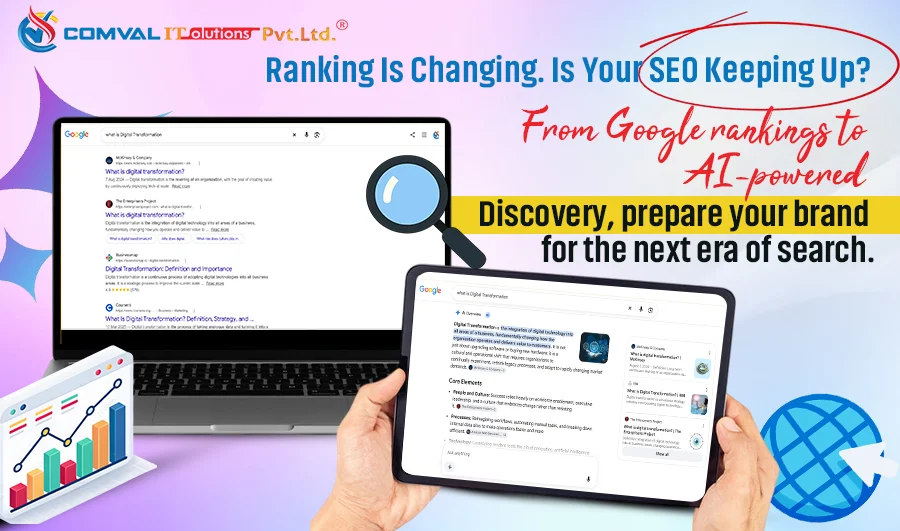
However, the search experience is expanding beyond traditional results pages. Google has introduced AI-powered experiences such as AI Overviews and AI Mode, while services such as ChatGPT can also help people research questions and explore information.
- Traditional organic search results
- Google AI Overviews
- Google AI Mode
- AI-powered search assistants
- Google Maps and local search
- Featured snippets and other search features
- Images, videos, and other visual search results
The goal is to make your website and business information genuinely useful wherever potential customers are looking.
How Is AI Changing the Way People Search?
One of the most important developments in modern search is the shift toward more conversational questions.
Previously, someone might search:
“SEO company Kolkata”
Now, they might ask:
“What should a small business in Kolkata look for when hiring an SEO company?”
Both searches are relevant, but the second reveals more about the person’s needs.
They may want to compare agencies, understand pricing, learn what services are included, or decide whether SEO is worth investing in.
Google AI Overviews can provide AI-generated summaries for certain searches, sometimes displaying links to websites that offer supporting information.
Instead of clicking through several articles to understand a topic, users may receive an initial explanation directly within Google.
Businesses should therefore create content that answers real questions clearly, accurately, and in sufficient detail.
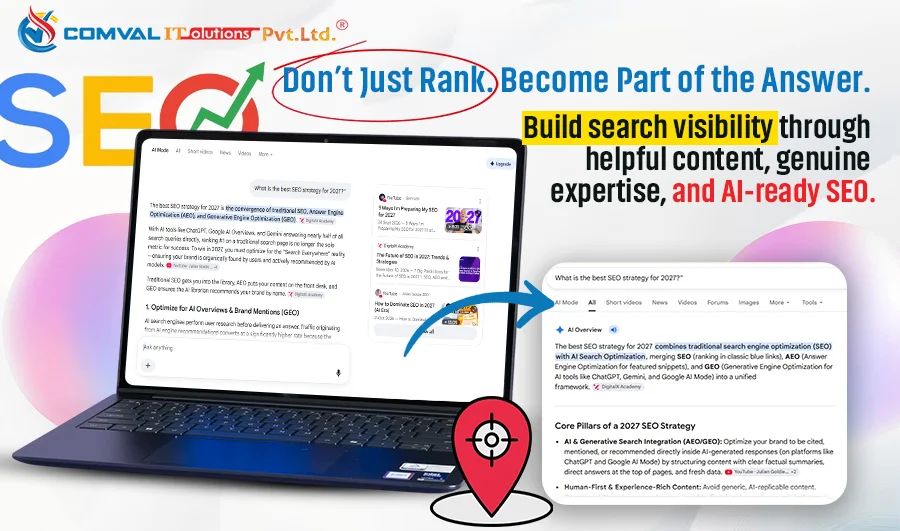
Google AI Mode provides a more conversational search experience. Users can ask detailed questions, explore comparisons, and continue with follow-up questions.
For example, a business owner might ask:
“What is better for a new ecommerce store: SEO or Google Ads?”
They could then ask:
“What should I prioritize if my marketing budget is limited?”
Helpful content explaining those decisions can make a website more relevant to the research journey.
AI assistants such as ChatGPT can also help users research products, services, business challenges, and marketing strategies.
When web search is used, relevant online sources may be linked within responses.
For a business, this creates another opportunity for discovery. However, no agency or optimization technique can guarantee that a particular brand will appear in an AI-generated response.
The practical approach is to publish accurate information, demonstrate genuine expertise, and maintain a trustworthy website.
For more detail, Google explains how these experiences work in its official AI features documentation.
SEO vs AEO vs GEO: What Is the Difference?
You may have encountered terms such as SEO, AEO, GEO, and AI SEO while researching digital marketing.
Although they are closely connected, each describes a slightly different focus.
SEO focuses on improving a website’s visibility in organic search results.
For example, an ecommerce business may want its product category page to appear when customers search for products it sells.
SEO helps search engines understand that page and its relevance to the user’s search.
Answer Engine Optimization (AEO) focuses on making information clear and useful for systems that provide direct answers to questions.
For example, a business might publish an article answering:
“How long does SEO take to show results?”
A useful article would answer that question directly, then explain the factors affecting the timeline.
This approach benefits readers who want quick answers without sacrificing the depth needed to understand a topic.
Generative Engine Optimization (GEO) is a term used for approaches intended to improve how content and brands are discovered, understood, or referenced in generative AI experiences.
It emphasizes useful explanations, credible information, original insights, and clear business identity.
For example, a detailed case study explaining how a company solved a real marketing problem offers more original value than a generic article repeating common SEO advice.
How They Work Together
| Approach | Main focus | Business example |
|---|---|---|
| SEO | Organic search visibility | A service page appearing for relevant Google searches |
| AEO | Clear answers to user questions | A useful FAQ answering a customer's question |
| GEO | Discoverability in generative AI experiences | Detailed, trustworthy content that may be referenced by an AI search tool |
These are overlapping approaches, not completely separate ranking systems.
Google has specifically clarified that its AI Search features do not require special SEO techniques beyond established best practices.
For business owners, the lesson is simple: focus on building a genuinely useful website before investing in complicated AI SEO tactics.
Seven SEO Trends to Prepare for in 2027
The following are important areas to consider when preparing your digital marketing strategy for the coming year. They represent developments and practical priorities, not guaranteed predictions about future search algorithms.
A keyword tells you what someone typed. Search intent helps explain what they actually want.
Consider these searches:
- “What is SEO?”
- “How much does SEO cost?”
- “SEO services for small businesses”
- “Hire an SEO agency in Kolkata”
Each represents a different stage in the customer’s decision-making journey.
The first user wants to learn. The second is researching an investment. The third is evaluating a service. The fourth may be ready to contact a provider.
A useful SEO strategy creates content for these different needs.
Businesses should move beyond adding keywords to pages and start answering the questions customers ask before making decisions.
AI tools can help people create content quickly. However, publishing large amounts of generic information does not necessarily make a website more useful.
Content becomes more valuable when it includes something meaningful that competitors cannot simply copy.
Examples include:
- Original case studies
- Real project examples
- Expert explanations
- Before-and-after comparisons
- Practical tutorials
- Industry-specific insights
- Genuine customer experiences
Suppose two agencies publish an article about improving website conversions.
One repeats general advice about better buttons and attractive designs.
The other explains how it identified a specific website problem, what changes were made, and how the results were measured.
The second article provides additional practical value because it demonstrates experience.
Google’s people-first content guidance emphasizes original information, expertise, reliability, and satisfying the reader’s needs.
Even the best content can struggle to reach people if search engines cannot access or understand the website.
Technical SEO remains a foundation for both traditional and AI-powered search.
Important elements include:
- Crawlable, indexable pages
- Logical website navigation
- Clear headings
- Relevant internal links
- Mobile-friendly layouts
- Fast and stable page experiences
- Descriptive page titles
- Accessible text content
- Accurate canonical tags
- Appropriate structured data
Structured data can help search engines understand certain types of information, but it does not guarantee rankings or AI citations.
For business owners, the priority is to make important pages easy for visitors and search systems to find.
Imagine searching for advice about investing in digital marketing.
Would you trust an anonymous page with no business information, or a company that clearly explains its services, experience, work process, and real results?
Trust becomes particularly important when customers are comparing providers.
A business website should clearly communicate:
- Who the company is
- What services it provides
- Who those services are for
- Where it operates
- How customers can contact it
- What relevant experience it has
- What evidence supports its claims
Testimonials, authentic client work, professional credentials, and verifiable project examples can help visitors evaluate credibility.
For service-based companies, this information can influence whether someone chooses to enquire.
Not every business needs global visibility.
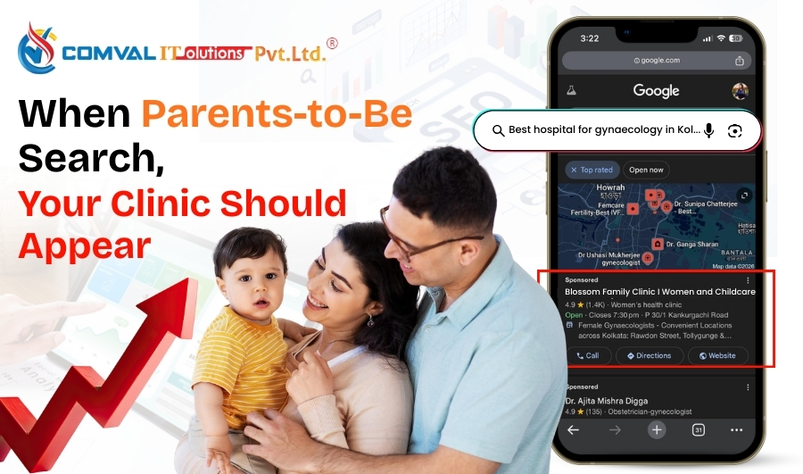
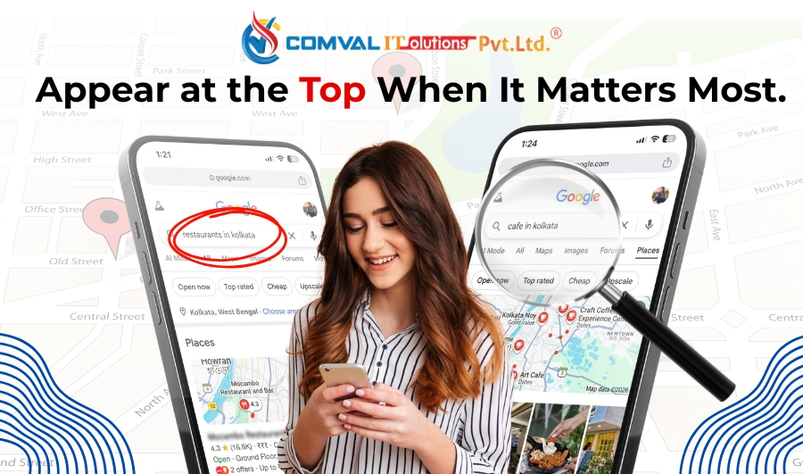
A restaurant in Kolkata, a healthcare clinic in Salt Lake, or a real estate agency in New Town may benefit most from reaching people in its actual service area.
Local SEO helps businesses provide relevant information when nearby customers search for products and services.
Important elements include:
- Accurate Google Business Profile information
- Relevant business categories
- Correct contact details
- Genuine customer reviews
- Useful location-specific pages
- Clear service descriptions
- Consistent business information
A well-managed local presence can help customers find a business and understand whether it meets their needs.
Businesses that rely on nearby customers can explore professional Google Business Profile management services as part of their local marketing strategy.
Search is not limited to text.
People also discover information through images, videos, product listings, and other visual experiences.
For businesses, visuals can make complex information easier to understand.
For example, a web development company might show a website redesign comparison. An ecommerce business could provide detailed product images. A digital marketing company might use charts to explain campaign performance.
Visual content should support the information on the page rather than simply decorate it.
Websites should also work well across mobile phones, tablets, laptops, and desktops.
A smooth browsing experience helps visitors read, compare, and contact businesses more easily.
Ranking for a keyword can be valuable, but rankings alone do not tell a business whether its marketing investment is working.
A website may attract substantial traffic without generating meaningful enquiries.
Another website may receive fewer visitors but attract customers who are more interested in its services.
Businesses should therefore measure outcomes such as:
- Organic search clicks and impressions
- Relevant search queries
- Engagement with important pages
- Contact form submissions
- Phone calls
- Consultation bookings
- Qualified leads
- Sales or enquiries generated from search
Google Search Console provides information about organic search performance. Google Analytics can help businesses understand what visitors do after arriving.
AI-feature performance in Google Search is included within Search Console’s overall Web search reporting, rather than a dedicated AI Overview-only report.
Businesses should assess whether improved visibility is creating meaningful opportunities, not just additional traffic.
How Can Businesses Prepare Their Websites for AI Search?
Understanding the trends is useful, but putting them into practice matters more.
Here is a practical starting plan.
Begin by examining what your website already offers.
Ask yourself:
- Can visitors understand your services quickly?
- Does every important service have a clear page?
- Is the website easy to navigate?
- Does it work properly on mobile?
- Are there broken links or outdated information?
- Can customers easily contact your business?
Fixing basic website problems should come before creating large amounts of new content.
Identify the questions customers ask before contacting you.
A website development company might research topics such as:
- How much does a business website cost?
- What makes a website SEO-friendly?
- How long does website development take?
- Should I redesign my existing website?
- What features does an ecommerce website need?
These questions can become useful blog topics, FAQ sections, and supporting guides.
The strongest content begins with a real customer problem.
Create content that supports the main topics of your website.
For example, a digital marketing company might maintain dedicated service pages for SEO, PPC, social media marketing, and website development.
Supporting articles can explain how each service works, when it is useful, what it costs, and what business owners should consider before investing.
This helps readers move naturally from learning about a topic to exploring a relevant service.
A structured approach also makes internal linking easier and helps related pages support each other.
Your website should help visitors understand your company without needing to search elsewhere.
Include accurate business details, service descriptions, location information, contact options, and genuine proof of work.
For businesses serving multiple countries, avoid creating nearly identical location pages with only the country names changed.
Instead, provide genuinely relevant information for each target market, including services available, communication processes, and local customer needs.
Ensure important pages can be accessed and understood by search engines.
Check your website’s indexing status in Google Search Console, resolve technical problems, and keep important text visible and accessible.
Use descriptive headings, logical internal links, and suitable structured data when supported by the page’s content.
Businesses should also check whether their hosting or security settings unintentionally block legitimate search crawlers.
Where possible, strengthen your content with information based on actual experience.
For example, an SEO agency might explain how it approached a client’s technical audit, keyword research, or website content restructuring.
A real case study should distinguish between the problem, the work completed, and the measured outcome.
Avoid inventing performance figures or claiming results that cannot be verified.
SEO is an ongoing process.
Review which pages attract relevant search traffic, which topics generate engagement, and which pages lead to customer enquiries.
Update content when information changes or when readers would benefit from better examples.
Monitoring AI-assisted discovery may also involve checking how different search platforms respond to important business-related questions, while recognizing that results can vary and are not a reliable ranking system by themselves.
A Practical Example: A Small Business in Kolkata
Consider a restaurant owner in Kolkata who wants to attract more customers online.
The business has a website, an Instagram profile, and a Google Business Profile, but it receives few enquiries.
A traditional SEO approach might begin by improving the restaurant’s service information, local pages, and Google visibility.
An answer-focused content approach could address questions customers actually ask, such as:
“Does the restaurant offer private dining?”
“Is there parking nearby?”
“Can customers reserve a table online?”
“Does the restaurant offer vegetarian options?”
Clear answers help potential visitors make decisions.
A broader AI search optimization strategy would also emphasize consistent business information, updated service details, accurate menus, useful images, and credible customer feedback.
The objective is not to force an AI system to recommend the restaurant.
It is to make the business information accurate, discoverable, and valuable wherever customers look for it.
The same principle applies to healthcare providers, ecommerce stores, real estate businesses, educational institutions, startups, and B2B companies.
Does AI Search Optimization Replace Traditional SEO?
No.
AI search optimization builds on many of the same foundations as traditional SEO.
A website still needs useful content, technical accessibility, relevant information, a logical structure, and a good user experience.
Terms such as AEO and generative engine optimization describe additional ways of thinking about visibility, but they do not eliminate the need for core SEO practices.
Google’s official guide to optimizing for generative AI features recommends prioritizing valuable, original content and established SEO practices rather than relying on supposed shortcuts for AI visibility.
For most businesses, strengthening these foundations is a more sensible starting point than adopting every new SEO trend.
How Comval IT Solutions Helps Businesses Prepare for the Future of SEO
As search experiences evolve, businesses need a strategy that connects website quality, content, technical performance, and customer intent.
Comval IT Solutions provides digital marketing and website development services to help businesses improve their online presence and create opportunities for growth.
Our approach can bring together:
SEO Strategy: Understanding relevant searches, audience intent, and opportunities for organic visibility.
Technical SEO: Reviewing website accessibility, page structure, mobile usability, and important technical elements.
Content Marketing: Creating useful service pages, blogs, and supporting content that answer customer questions.
Local SEO: Helping businesses maintain accurate information and improve their local search presence.
Website Development: Building business websites that are structured, usable, and ready to support digital marketing activities.
Performance Measurement: Reviewing traffic, enquiries, and website performance to identify areas for improvement.
Businesses looking to improve their visibility can explore Comval’s SEO services and solutions.
No SEO agency can guarantee first-place rankings or inclusion in AI-generated answers. A reliable strategy focuses on improving the quality, accessibility, relevance, and usefulness of your online presence.